

From Deathloop to Returnal, how 2022 became the year of the video game time loop - beardenschanithems86
From Deathloop to Returnal, how 2021 became the twelvemonth of the computer game time cringle
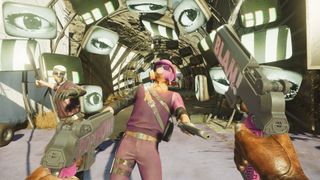
Picture games are nil if not disciples to the Zeitgeist. Those who were keeping up with the diligence almost a decade past will remember that 2013 was avowed the Twelvemonth of the Bow, after dozens of protagonists suddenly appeared to have progressive from archery cultivate with the highest possible distinction. Three old age after, Overwatch kicked off a wave of hero shooters, shortly in front PlayerUnknown's Battlegrounds spawned an entirely new genre of battle royale.
These trends range from big picture show game-changers (Destiny's live-service storytelling) honorable down to the nitty gritty of UI design (Circumstances's cursor-supported menus), alongside more abstract concepts that inspire new waves of creativity. You only have to look to 2021, e.g., to find tetrad completely different games centred around same unifying idea; the clock eyelet.
The concept of 2-Feb isn't exactly new dominio for video games (2018 saw the release of Minit and Outside Wilds, to name just two early examples), but its bearing crosswise the ticket of 2021's titles is enough to seduce you wonder why then many developers have suddenly embezzled to information technology at the start of this new generation. In a year when time itself has slowed to a standstill for many of us, then, where has this obsession with repetition originated from?
No meter similar the present
"I think it's almost like a Hollywood trend," says Ratloop Games' James I Anderson of the time closed circuit's proliferation. "A couple of movies like Edge of Tomorrow came out, and those things seminal fluid ideas into the games industry, and then certain game ideas resubmit into the shoot industry as well. So it's sort of like a two way street. But I think up given the fact that there were few films that came out with this melodramatic time loop a while agone, IT then spawned these video games afterwards down the tag."
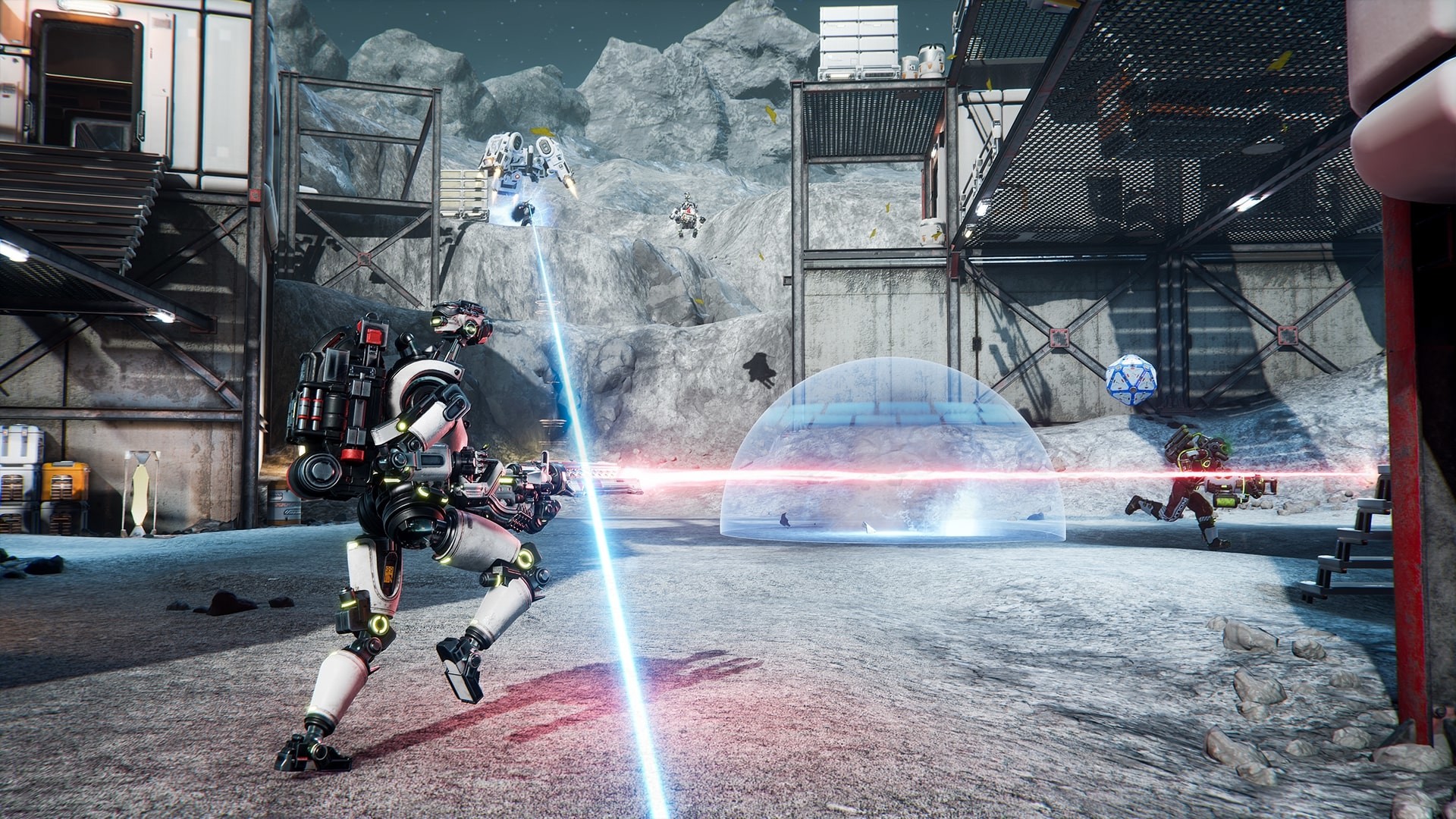
Ratloop's coming multiplayer shooter, Lemnis Gate, is one so much game; a turn-settled Federal Protective Service where every turn takes place in a time coil, with all subsequent run introducing a new variable to the fighting arena. For the studio, the idea generated from the need to stick ou equally a mid-tier up title amongst its larger competitors in the genre, as Phil Anderson explains.
"We wanted to bring off something innovative to the table because we're an indie studio," he tells GamesRadar+. "So we needed a gameplay pilfer or something that brings Lemnis Gate into the spotlight. We really tried to bring a twist that fundamentally restricted the agency that a number one person shooter would be played, drawing connected those overaged schoolhouse design approaches from that era when games weren't really defined by genres."
Lemnis Gate's multiplayer firefights are entirely their own thanks to the game's unique brand of disk-shaped warfare, slowing down the time-honoured kinetics of an online triggerman for an experience that's off the beaten track more strategically oriented; less team deathmatch, more hyper violent chess.
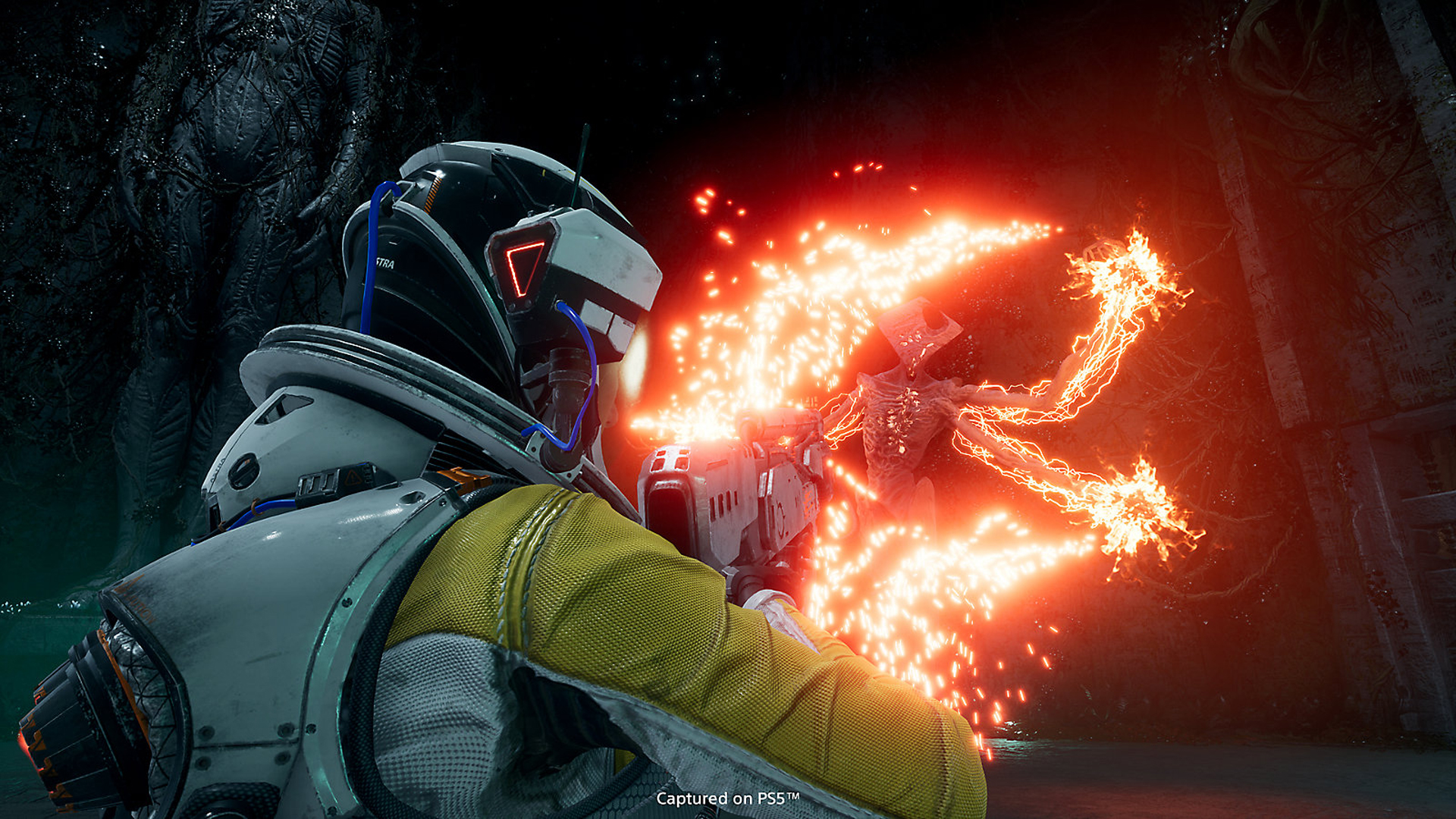
But metre loops aren't just being wont to innovate gameplay, either; PS5 exclusive Returnal is the first Housemarque project developed with a dedicated narrative team, and the game's looped setup was the catalyst that inspired the studio to dive headfirst into storytelling territory.
"Returnal's dark sci-fi prison term intertwine frame-up was so exciting narratively for us because Selene, our deep space scout repeating the crash, allows United States to add gobs of hidden layers narratively that are unclothed through repeating," communicative managing director Angelo Correr Louden told GamesRadar in the first place this twelvemonth. "The cyclical nature of the narrative pattern means the more you labor full-face, the more you discover Selene. What does the cycle do to someone? What is the planet's history? Wherefore are things beyond Selene's inclusion appearing here?"
Eastern Samoa a roguelike, Returnal's clock loop narrative fits perfectly with the structure of its play, as Genus Selene is resurrected back at her ship after all death, only transistorized with a bit many knowledge about the planet she's crash landed onto. If that cycle sounds familiar, that's perchance because it invokes a wider true statement about the medium itself; what is any computer game if non a meter loop, in which the player resets and replays the unvarying experience after every death, defeat, or power down?
With that in mind, possibly we shouldn't live asking why developers are abruptly taken up with time loops, and instead wondering wherefore it's taken this long for the device to finally surface to the foreground of our interactive stories.
Circle work
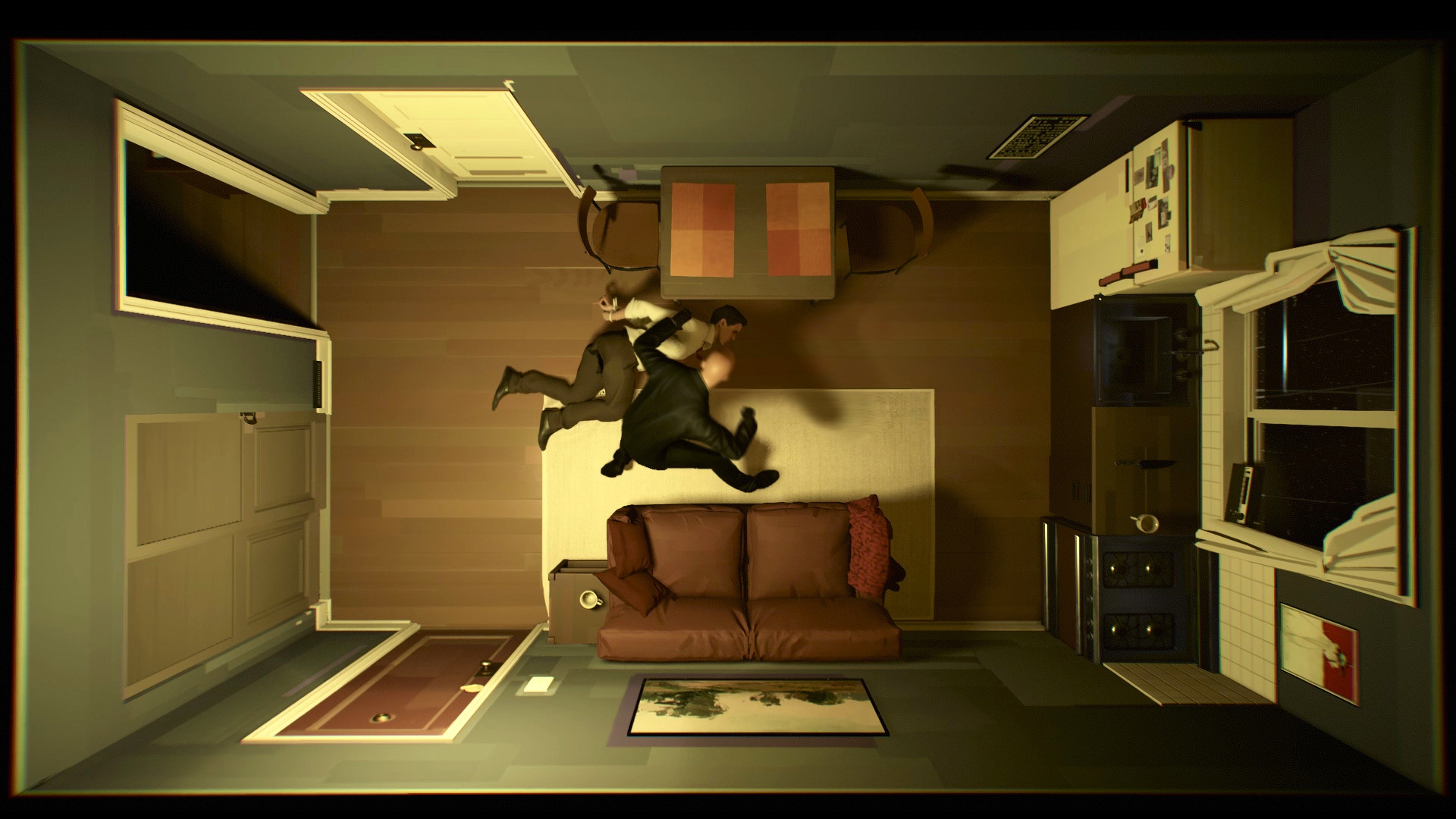
While Returnal takes lay crosswise an entire alien satellite, 12 Minutes narrows the setting of its time loop right down to a single apartment, viewed from the top-down perspective as our unnamed booster experiences the same titular time period finished and over again. For creator Luis Antonio, the circular complex body part of his indie communicative gamble mettlesome was never the terminus a quo for 12 Minutes, but rather an result for the kind of story atomic number 2 wanted to order.
"I didn't set out locution 'I want to make up a narrative that goes around a sentence loop.' That just came forbidden of the geographic expedition of the mental object itself," he explains. "I didn't sleep with this would become a narrative game. IT's not even something that I was a super fan of. I think dialogue is very tricky and A a designer, I like to give you interactions with characters, but it's hardened to tell you what you should be saying. Then creating a narrative around this, I believe it's bad challenging."
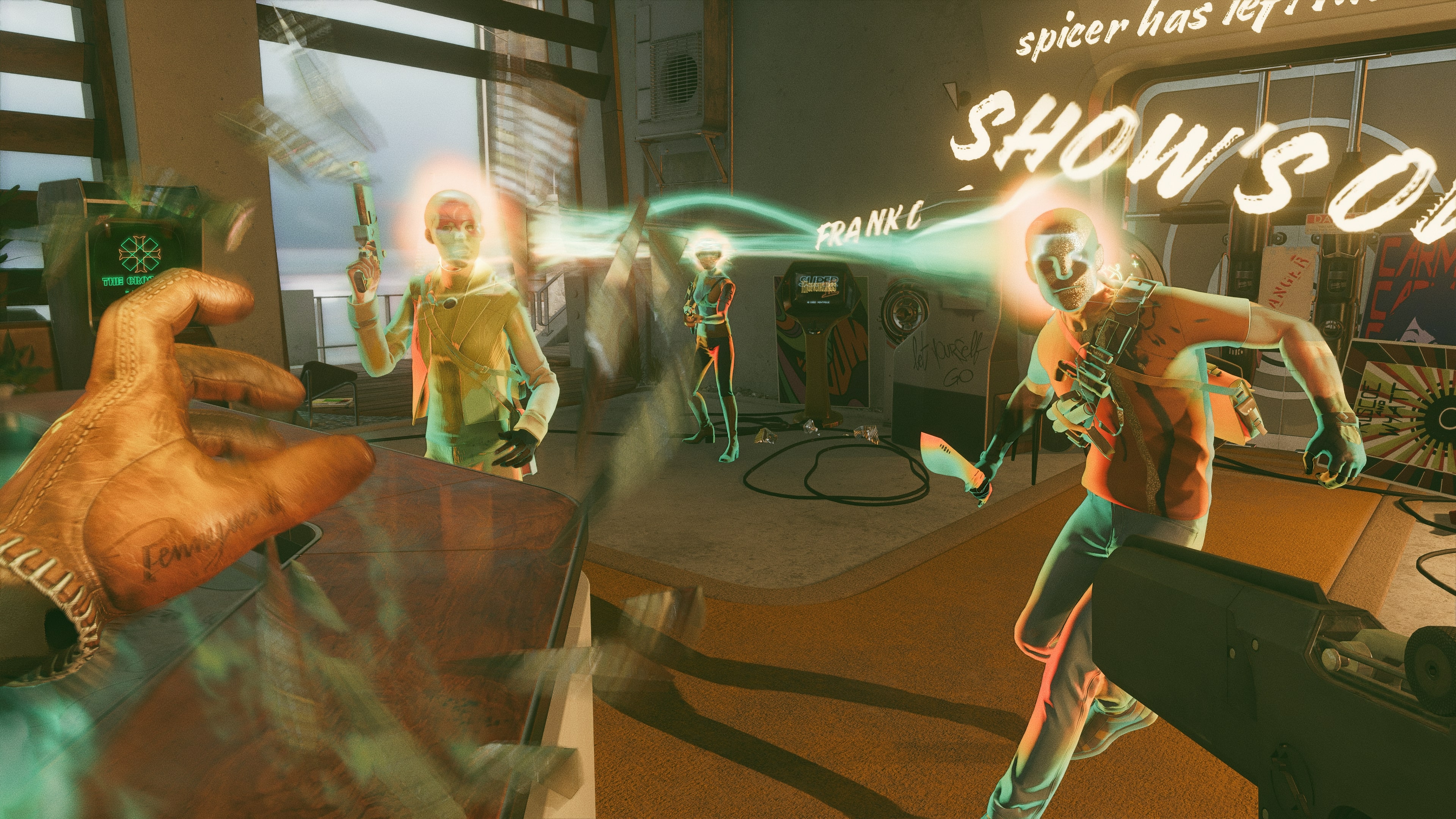
If Antonio's turn towards the clock loop was fairly concurrent, the opposite sack exist said for Deathloop; Arkane's upcoming murder puzzle sim which tasks players with breaking the cycle of a revenant, blood-dirty 24 hours on the modern day Gamorrah of Blackreef Isle.
Creative music director Dinga Bakaba says that the rotary construction was about answering cardinal key questions for the studio apartment to force out the parameters of the immersive sim genre it's been in operation in for over two decades: "Is there a brave structure that could boost people to build that conversance with the spaces, and so that past the finish of the game they feel like experts, the similar fashio you might in a Counter-Strike map? And is there a right smart to do that but still tell an stimulating story with character development?".
"We tried to bring a convolute that fundamentally modified the way that a first person shooter would embody played."
James Anderson
Arkane thus hopes that its time loop encourages players to become a master of the environment in which they detect themselves captive, memorising the intricacies of Blackreef Islet to tweak the perfect 'run', and kill completely eight Visionaries that are keeping protagonist Colt stuck in the cycle. As for the story that Bakaba refers to, the studio is understandably keeping the true nature of Colt's recurring incubus hidden until launch, but suffice to say that every freshly run wish bring far revelations that step by step reveal Blackreef's biggest secrets.
The diversity within straight-grained just this small handful of titles – from Kubrickian point-and-tick stake games to arcade-infused roguelikes – exemplifies just how malleable the prison term loop is as a platform for ennobling developers in storytelling, gameplay, and on the far side. That helpfully avoids the dangers of oversaturation, where every time curl game looks the same, but that doesn't mean studios should pursue the estimation purely for the sake of it. For games like 12 Minutes, the time loop structure surfaced organically through the maturation of its floor, whereas others, such American Samoa Deathloop, the wheel was a statement of intent for the studio apartment to drive its ambitions high than ever.
Unlike the events of Deathloop, however, video games' fascination with the concept International Relations and Security Network't at risk of exposure of repetition itself forever. Developers will inevitably ingeminate, break the mould, and subvert expectations, playing around with time beyond the boundaries of a cyclical structure. The metre loop may beryllium spiralling round diligence circles right now, but IT won't be time-consuming in front the next big affair in video games breaks its cps.
For more, check impermissible the best FPS games to play right immediately, or watch over more of our Deathloop preview in the video on a lower floor.

I'm GamesRadar's Features Writer, which makes me responsible for gracing the internet with as many of my words as realistic, including reviews, previews, interviews, and more. Serendipitous internet!

Source: https://www.gamesradar.com/from-deathloop-to-returnal-how-2021-became-the-year-of-the-video-game-time-loop/
Posted by: beardenschanithems86.blogspot.com
0 Response to "From Deathloop to Returnal, how 2022 became the year of the video game time loop - beardenschanithems86"
Post a Comment